

COMUNICADO DE PRENSA.
Segunda Semana de la Resiliencia 2024.
Un encuentro para impulsar la resiliencia comunitaria y la seguridad en Colombia
• El 20 de noviembre se desarrollará en el Hotel W de Bogotá una serie de conversatorios para conmemorar la semana de la resiliencia 2024.
• En noviembre de 2023 se llevó a cabo la primera edición que dejó recomendaciones para que los nuevos mandatarios locales contaran con insumos para la formulación de sus Planes de Desarrollo Territorial (PDT) y los Planes Integrales de Seguridad y Convivencia Ciudadana (PISCC).
• La jornada tendrá como invitados al ministro del Interior, el Director de la Policía Nacional, las Alcaldesas de San Jacinto y Cáceres, además de lideresas sociales, quienes conversarán sobre los retos de la seguridad ciudadana en los territorios.
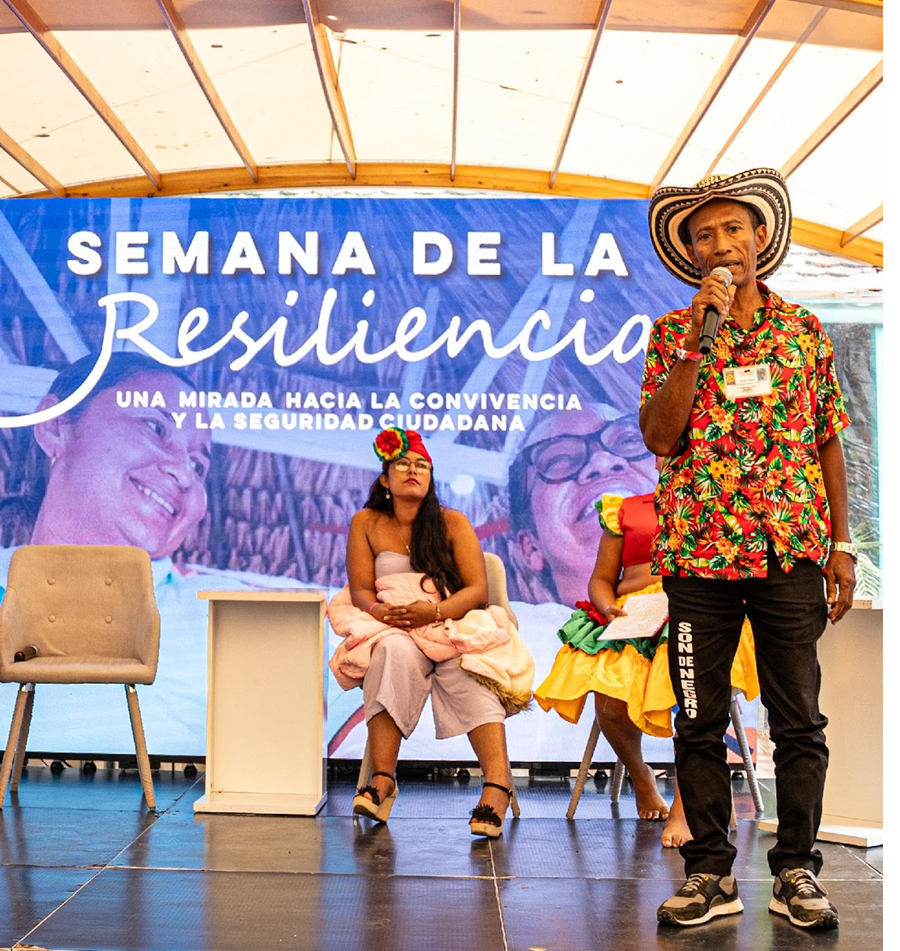
Bogotá, noviembre 2024. Llega la Segunda versión de la Semana de la Resiliencia que concluirá con un evento presencial el próximo 20 de noviembre en Bogotá, en el que comunidades, líderes y autoridades comprometidas con un país en paz, compartirán experiencias y recomendaciones de cara a los retos en convivencia y seguridad ciudadana que enfrenta el país.
Esta nueva versión es además una oportunidad para compartir, aprender y visibilizar los resultados de la Actividad Somos Comunidad de la Agencia de los Estados Unidos para el Desarrollo Internacional (USAID) que durante los últimos cuatro años ha trabajado en 35 municipios del país que han sido afectados por el conflicto, desarrollando iniciativas de la mano de autoridades locales, comunidades y entidades del orden nacional para la prevención de riesgos frente al crimen y la violencia que fortalezcan la resiliencia comunitaria.
USAID y FUPAD a través de Somos Comunidad en alianza con El Espectador por segundo año consecutivo unen esfuerzos para llevar de frente el tema ante representantes del gobierno nacional, el sector privado, autoridades territoriales, actores de la cooperación internacional, academia, medios de comunicación y líderes de opinión, mediante un diálogo franco y reflexivo sobre los logros alcanzados por Somos Comunidad en los ejes de cohesión social y fortalecimiento de los sistemas de seguridad locales.
La apertura del evento estará a cargo de Roberto Obando, director de país de PADF Colombia; y Jeremiah Carew, Subdirector de USAID Colombia, quienes introducirán una jornada que estará llena de aprendizajes y experiencias compartidas. Élber Gutiérrez, productor general de El Espectador se les unirá para destacar una de las novedades más importantes de esta Segunda versión de la Semana de la Resiliencia 2024: Por el fortalecimiento de la seguridad ciudadana en los territorios afectados por el conflicto (PDET).
Sus palabras darán paso a dos paneles temáticos que permitirán a los diversos actores brindar recomendaciones frente a los diferentes retos en convivencia y seguridad ciudadana que enfrenta el país, enfatizando en la importancia de la generación de estrategias que se
generan en el ámbito comunitario y que involucran actores institucionales, así como aquellas que fortalecen las capacidades institucionales para acercarse a las comunidades.
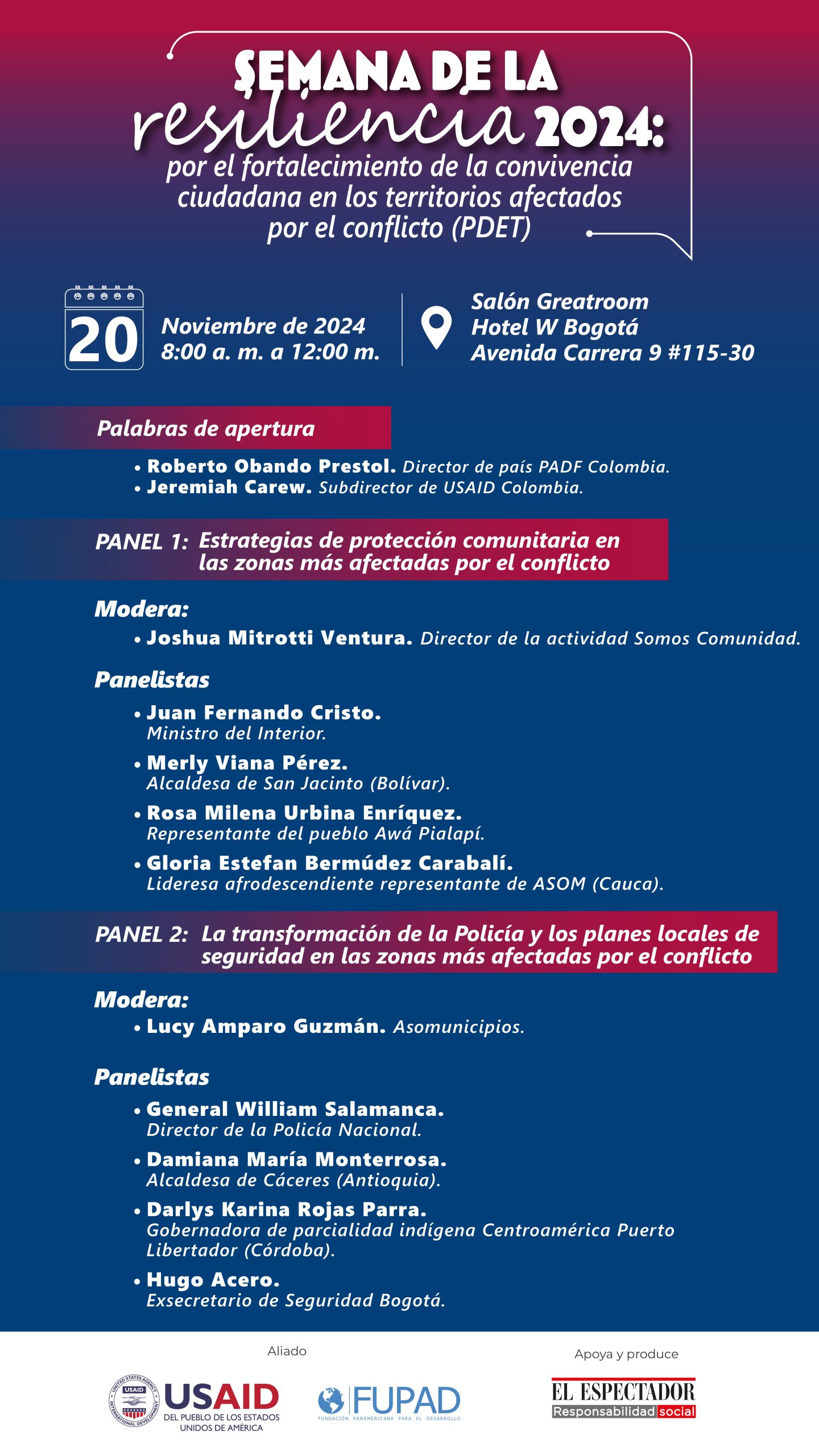
Panel I: ‘Estrategias de protección comunitaria en las zonas más afectadas por conflicto armado’. Estará moderado por Joshua Mitrotti, Director de Somos Comunidad. Abordará la importancia de la generación de redes de seguridad y mecanismos de colaboración, para tener acciones sostenibles en el tiempo y que sean parte de la implementación de políticas de prevención del crimen y la violencia en Colombia. Contará con la participación de destacados panelistas como Juan Fernando Cristo, Ministro del Interior; Merly Viana Pérez, alcaldesa San Jacinto (Bolívar); y Rosa Milena Urbina Enríquez, representante Pueblo Awá Pialapí.
Panel II. Moderado por Lucy Amparo Guzmán, de Asomunicipios, el segundo panel explorará los logros y desafíos en la implementación de “la transformación de la Policía y los planes locales de seguridad en las zonas más afectadas por el conflicto”. Conversación que tendrá como protagonistas al General William Salamanca, director de la Policía Nacional; Damiana María Monterrosa, alcaldesa de Cáceres (Antioquia), Darlis Karina Rojas Parra, líder comunitaria del municipio de Puerto Libertador (Córdoba); y Hugo Acero, exsecretario de seguridad de Bogotá, quienes compartirán lecciones aprendidas y estrategias futuras en esta materia.
Este evento se llevará a cabo en el Hotel W de Bogotá, de 8:00 a.m. a 1:00 p.m., en donde los asistentes podrán escuchar y compartir sus experiencias frente a las acciones de seguridad ciudadana y la construcción de paz, además de disfrutar de una exposición audiovisual interactiva que da cuenta de las voces y rostros que son agentes de cambio en los territorios.

Sobre Somos Comunidad
- Somos Comunidad es una actividad innovadora de la Agencia de los Estados Unidos para el Desarrollo Internacional (USAID), cuyo propósito es contribuir a la seguridad ciudadana y potenciar la resiliencia comunitaria en los territorios donde se implementa.
- La Resiliencia Comunitaria es entendida como el conjunto de capacidades que tiene el Estado en un territorio y las desarrolladas por parte de la comunidad y los ciudadanos, que permite prevenir, mitigar o recuperarse de las acciones violentas para mantener niveles adecuados de convivencia ciudadana.
- Para lograr su propósito Somos Comunidad se enfoca en dos componentes principales: Mejoramiento de la Cohesión Social y Fortalecimiento de los Sistemas Locales de Seguridad, que sumados y articulados, permiten alcanzar la Resiliencia Comunitaria en los territorios más afectados por el conflicto.
- Durante los últimos cuatro años, Somos Comunidad ha logrado resultados significativos en comunidades vulnerables, fortaleciendo la seguridad ciudadana, la cohesión social y promoviendo una colaboración efectiva entre ciudadanía e instituciones nacionales y locales.
- Entre los principales resultados se destacan:
– 126 organizaciones sociales fueron fortalecidas en planificación organizacional, conceptos de seguridad y prevención de riesgos, aumentando su participación en la elaboración y seguimiento de políticas públicas.
– 52 organizaciones sociales han mejorado su nivel de desempeño en un 88%, según el Índice de Desempeño Organizacional (OPI).
– 33.000 personas transformaron sus comunidades al participar activamente en espacios de diálogo y colaboración.
– Se desarrollaron 35 espacios de veeduría y participación como: Consejos Municipales de Juventud, Consejos Municipales de Planificación, Subcomités de Prevención y Protección y Comités de Víctimas del Conflicto Armado, entre otros.
– Se desarrollaron 72 modelos de autoprotección y protección, previniendo y mitigando factores de riesgo.
– 2 guardias indígenas y 1 guardia cimarrona fortalecidas para prevenir y mitigar riesgos.
– Más de 3.260 miembros de la Policía fueron capacitados en seguridad ciudadana, prevención y derechos humanos para implementar el nuevo modelo de Servicio Policial a nivel nacional.
– Se promovieron 105 políticas públicas, incluyendo 35 Planes de Desarrollo Territorial, 35 PISCC y 23 Planes Integrales de Prevención y Protección, que reflejan las demandas de las comunidades en términos de protección, seguridad y convivencia.
– Se desarrolló e implementó un módulo PISCC en el Sistema de Planeación Territorial (SisPT) del Departamento Nacional de Planeación (DNP) para la formulación y seguimiento de los PISCC en los 1,103 municipios de Colombia.
– Se implementaron y documentaron 57 iniciativas de prevención del crimen y la violencia (CVP) impactando a más de 4,354 personas.
– Más de 490 funcionarios y funcionarias fueron formados en enfoque de género y diversidad sexual.
- Estas experiencias serán compartidas con diferentes aliados y actores clave del orden nacional, con el objetivo de continuar impulsando avances y adaptando estrategias para el desarrollo y la seguridad en las comunidades afectadas por el conflicto.